GRA AUSTRALIA
Golden Retriever Atlas Evidence-led guidance for Australian homes
ReferenceAustralia

Identity · evidence · welfare

Finding a Golden Retriever in Australia

Ask better questions, verify each record independently and give yourself permission to walk away from pressure, missing information or a poor match.

Choose a pathway before choosing a photograph

A Golden Retriever may come through a reputable animal-welfare or breed-rehoming organisation, an accountable private rehoming, or a breeder. None of those labels proves quality on its own. The RSPCA Australia acquisition policy recommends careful planning and consideration of reputable adoption. Ask every source what is known, what is unknown, how the dog has lived and what support follows placement.

An adult may offer more observable information about size, coat, activity and current behaviour. A puppy offers early-life records but requires intensive supervision, socialisation, education and flexible care. Start from your ordinary week, not an ideal holiday week: work hours, children, resident animals, grooming, rental rules, travel, climate, veterinary access and backup care.

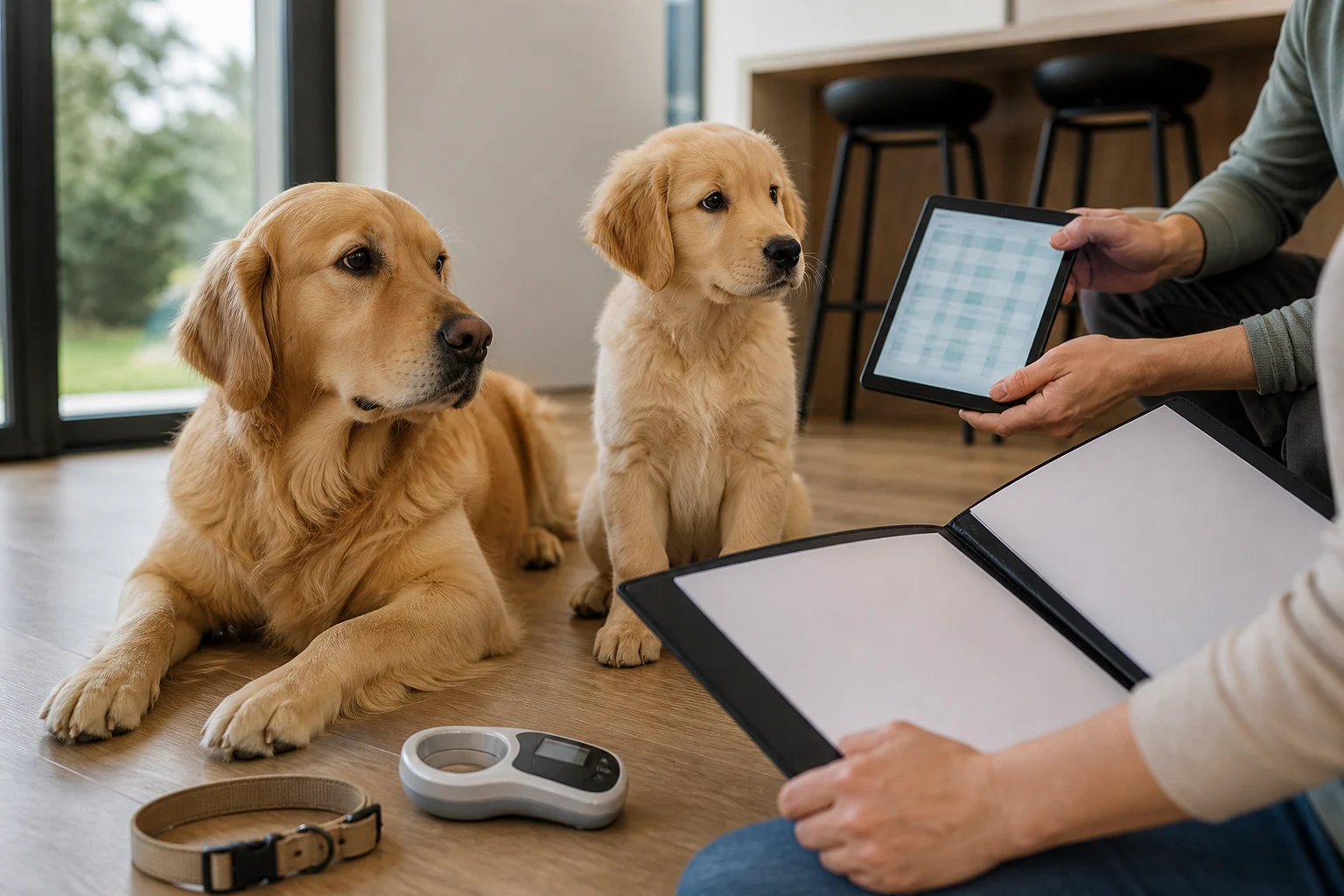
Golden Retriever and puppy beside health records and a microchip scanner during a responsible verification
Illustrative image: verify identity, health records and living conditions before any commitment.

Identity before trust

Verify the person, prefix and dog separately

Ask for the supplier’s full legal or organisation name, physical location, applicable breeder or source number, and the registered identities of both parents. Use the Dogs Australia breeder check for a claimed prefix or membership number. Its disclaimer is important: a result does not endorse reputation or guarantee that a puppy is healthy or suitable. Registration is one verifiable fact, not a welfare certificate.

A Dogs Australia prefix forms part of a registered dog’s name under the current registration regulations. Match the prefix, parent names and registration numbers across the pedigree and health documents. Ask the relevant state member body directly if records are unclear. If a business name or ABN is claimed, ABN Lookup can confirm public register details; an active ABN still says nothing about animal welfare.

For adoption or rehoming, verify the organisation or current keeper, the dog’s microchip and ownership trail, and authority to transfer. A polished website, social following, club membership or copied certificate should never replace checks with the issuing body.

Health evidence

Read the result, date and dog identity

Australian Golden Retriever guidance commonly focuses on hips, elbows, eyes and heart. The Dogs Australia CHEDS scheme standardises hip and elbow imaging and scoring. ORCHID’s Australian Canine Eye Scheme records specialist eye examinations. The Golden Retriever Club of NSW buyer guidance asks prospective owners to see hip, elbow, cardiac and eye certificates for both parents.

Do not accept “health tested” as the whole answer. Request the original certificate or independently accessible database record. Check registered name, registration number, microchip where recorded, examination date, issuing scheme, result and professional sign-off. Ask which DNA variants were tested, see the results for both parents and ask how the pairing was assessed. A broad commercial DNA panel does not replace hip, elbow, cardiac or specialist eye assessment.

Interpretation matters. A score or examination describes the finding under that protocol; it is not a guarantee for descendants. Results from relatives add context but do not remove uncertainty. Ask what health has occurred in close relatives, what information is unavailable and how updates are shared. Confirm current requirements with Dogs Australia, the applicable state member body and breed club because rules and schemes change. For individual veterinary interpretation, ask your own veterinarian.

Observe, ask, pause

What a visit or live video should establish

A visit is evidence gathering, not a ceremonial final step.

The mother and relationships

See the puppy with the mother where possible and ask why the father is elsewhere if absent. Observe comfort around the caregiver without demanding that any dog greet you. Avoid sources that repeatedly invent reasons the mother cannot be seen.

The living environment

Look for clean, safe areas with water, comfortable rest, age-appropriate space, human contact and opportunities to explore. Ask where puppies sleep, toilet, eat and meet ordinary household sounds. A staged room should not be the only area shown.

Live, responsive evidence

If distance prevents a visit, request an interactive video call rather than a recording. Ask to see the puppy move continuously between areas, with littermates and mother, and to view identifying documents. Still verify every detail outside the call.

Questions in both directions

An accountable source should ask about your schedule, children, animals, housing and plans. Ask about litter goals, daily care, veterinary events, social experiences, matching, return arrangements and support. Thoughtful scrutiny should be welcomed.

Development without guarantees

Socialisation is a process, not a promise

Ask for specific experiences rather than “well socialised”: people of different appearances, gentle handling, surfaces, sounds, short separations, grooming tools, car travel and safe contact with healthy animals. The RSPCA socialisation guide describes gradual, positive exposure; the AVSAB position statements place early socialisation alongside health-aware veterinary guidance.

More exposure is not always better. Flooding a frightened puppy can increase distress. A source can provide a thoughtful start but cannot guarantee adult temperament: inherited tendencies, health, pain, later learning and environment continue to matter. Ask how the puppy responds and recovers, not whether it “passed” a personality label.

Agreement and money

Read terms before a deposit creates momentum

Obtain the full written agreement before paying. It should identify the parties and dog or allocation process, total payment structure, deposit and refund conditions, collection timing, included records, any restrictions, return arrangements and what happens if the proposed puppy is unavailable or a veterinary concern appears. Ask for unclear clauses to be explained in writing. This is practical information, not legal advice.

The ACCC consumer-guarantee guidance explains rights when businesses supply goods or services, while applicability and remedies can depend on the transaction. A contract cannot turn a health prediction into certainty. For a dispute or significant commitment, consult the relevant state consumer agency or a lawyer.

Verify that the account name matches the identified recipient, use a traceable payment method and keep advertisements, messages, terms and receipts. Scamwatch’s pet-scam warning describes fake listings, upfront transfers and escalating transport charges. Urgency, secrecy, changed bank details or new fees after payment are reasons to stop and contact the bank promptly if fraud is suspected.
Identification and transfer

Follow the law where the dog will live

Microchip, advertisement, breeder identification, ownership transfer and council-registration duties vary across Australia. For example, the NSW Pet Registry transfer guide places defined transfer steps on the current keeper. Victoria’s Pet Exchange Register lets buyers check source numbers and requires specified identifiers in advertisements. Business Queensland explains its supply-number system.

Those examples are not a national checklist. Before commitment, use the government or local-council authority for the state or territory where the dog will live. At handover, check the microchip number against the paperwork and arrange the relevant database transfer. A pedigree-register transfer and a government pet-registry or microchip transfer are different processes; ask which party submits each and retain proof.

Transport and handover

Plan welfare before distance

Collection in person allows a final identity and condition check. For road travel, secure the dog appropriately, plan water and breaks, control temperature and never leave the dog unattended in a vehicle; the RSPCA road-trip guide provides practical preparation. For commercial transport, confirm the carrier independently, crate requirements, route, weather plan and who holds responsibility at each transfer.

Interstate movement can also involve biosecurity conditions. The Australian Department of Agriculture’s dog-travel guidance directs owners to current state and territory requirements. Do not let transport complexity become an excuse for missing identity checks or unexplained extra payments.

Reasons to stop

Red flags are patterns, not a scoring game

Pause when the source will not show the mother or living area, refuses live interaction, offers multiple unrelated breeds continuously, uses copied images, supplies mismatched names or dates, blocks independent verification, claims DNA replaces all other screening, guarantees health or temperament, or pressures immediate payment. Also question anonymous meeting points, third-party brokers, shipping-only arrangements, inconsistent locations and a story that changes when challenged.

The RSPCA puppy-farm guidance recommends reliable sources and seeing where a puppy was born where possible. One polished document cannot cancel several warning signs. Save evidence, reverse-search images or distinctive advertisement text, verify numbers at their source and walk away when the account remains inconsistent.

Lifetime budget

Price is only one early line

Plan for appropriate food, equipment, council and identification duties, routine and emergency veterinary care, parasite prevention, training, grooming, secure transport, holiday care and housing changes. Costs vary by location, dog, health and service provider, so obtain local quotes rather than trusting a universal total. The RSPCA pre-acquisition guide recommends assessing both time and continuing cost before bringing an animal home.

Frequently asked questions

Checks before commitment

Is adoption or a breeder the better route?

Neither route is automatically right for every household. A reputable rehoming organisation may offer an adult with observable behaviour and support; a responsible breeder may offer documented parent information and early-life records. Compare transparency, welfare, matching and lifelong responsibilities rather than assuming one label settles the decision.

Does a Dogs Australia breeder check prove that a breeder is responsible?

No. It can confirm that a supplied prefix or membership number appears in that registration system. Dogs Australia expressly says its check is not a representation about a breeder's reputation or a puppy's health or suitability. Verify identity, conditions, records and conduct independently.

Which Golden Retriever health records should I request?

Ask for independently verifiable hip, elbow, eye and cardiac results for both parents, plus relevant DNA results interpreted in the pairing. Match each certificate to the dog's registered identity and microchip where recorded, and check dates and issuing bodies. Screening reduces uncertainty; it cannot guarantee a puppy's future health.

What if I cannot visit before committing?

Do not rely on photographs or edited video alone. Request a live, interactive video call showing the puppy with the mother and the area where the dogs live, and ask the person to show identifying paperwork in real time. Independently verify details and consider waiting if distance prevents meaningful checks.

Is it safe to pay a puppy deposit?

A deposit creates risk and may form part of a contract. Before paying, verify the recipient and dog, read written terms covering allocation, cancellation and refunds, obtain a receipt and understand the payment method's protections. Urgency, changing bank details or repeated demands for transport and insurance fees are reasons to stop.

Which documents should be ready at handover?

Expect a written agreement or adoption record, receipt, microchip details and transfer steps, available registration or pedigree documents, vaccination and veterinary records, feeding information and copies of promised parent health results. Exact identification, registration and transfer obligations vary by state or territory, so confirm them with the relevant government authority.