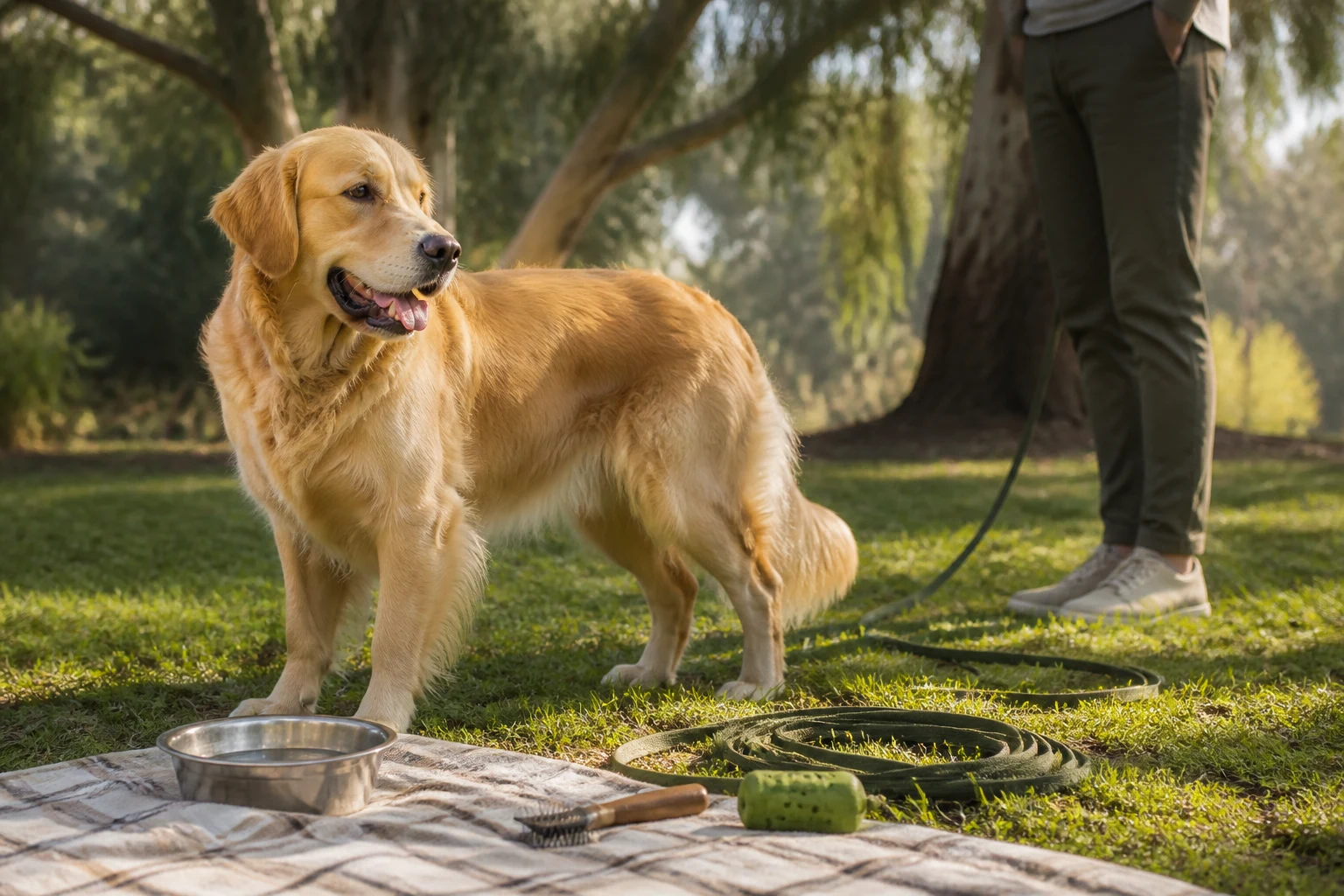
Activity · enrichment · education
Build a varied day, not a kilometre quota
The breed’s retrieving heritage makes searching, carrying and cooperative tasks useful options, but no activity is compulsory for every individual.
Move and recover
Offer walks, sniffing, free movement where lawful and safe, and play suited to the dog’s age and conditioning. Increase intensity gradually. Puppies, seniors and dogs with pain or disease need different plans. Watch gait, willingness and recovery rather than relying on a universal exercise number.
Use the nose and brain
Scatter food in safe grass, hide toys, practise simple searches, rotate chew items and teach names for objects. Enrichment should invite participation, not create frustration. The RSPCA dog-care guide places choice and positive challenges within good welfare.
Teach useful skills
Prioritise recall, loose-lead walking, calm greetings, releasing objects, settling and cooperative handling. Arrange easy repetitions and reward behaviour you want repeated. The AVSAB humane-training position supports reward-based methods and rejects pain, fear and intimidation.
Protect rest and balance
High activity can produce a fitter dog without teaching calm. Alternate exercise with sleep, quiet companionship and gradual comfortable periods alone. Feed for life stage and body condition with veterinary guidance; the WSAVA nutrition toolkit supports individual nutritional assessment.
A garden is useful management space, not a substitute for shared activity or exploration. A realistic week includes short training moments, outings with varied smells, calm time near people, grooming practice and arrangements for care during work, illness and travel. Adolescence may temporarily bring more impulsive choices and slower responses around distractions; reduce difficulty, reinforce familiar skills and keep expectations consistent rather than escalating force. Later in life, a dog may prefer shorter outings, easier surfaces and more recovery while still enjoying scent work and social contact.
Retrieving and swimming deserve safety rules. Repeated high-speed ball chasing can combine sharp turns, jumping and rising arousal, so mix retrieves with searching, walking and pauses. Check water access, currents, blue-green algae warnings and the dog’s ability to exit before swimming; rinse and dry the coat and ear flaps afterwards. Not every Golden is a confident swimmer, and enthusiasm does not prevent fatigue. Use a properly fitted flotation aid where conditions or ability justify it, supervise continuously, and stop while movement remains coordinated.
Education also includes handling that future care will require. In brief, rewarded sessions, teach the dog to offer a chin rest, allow an ear flap to be lifted, present a paw and stand on a non-slip surface. Consent-based practice does not remove the need for necessary veterinary treatment, but it can make routine checks clearer and less stressful. If touch suddenly becomes difficult, investigate discomfort rather than treating resistance as disobedience.